
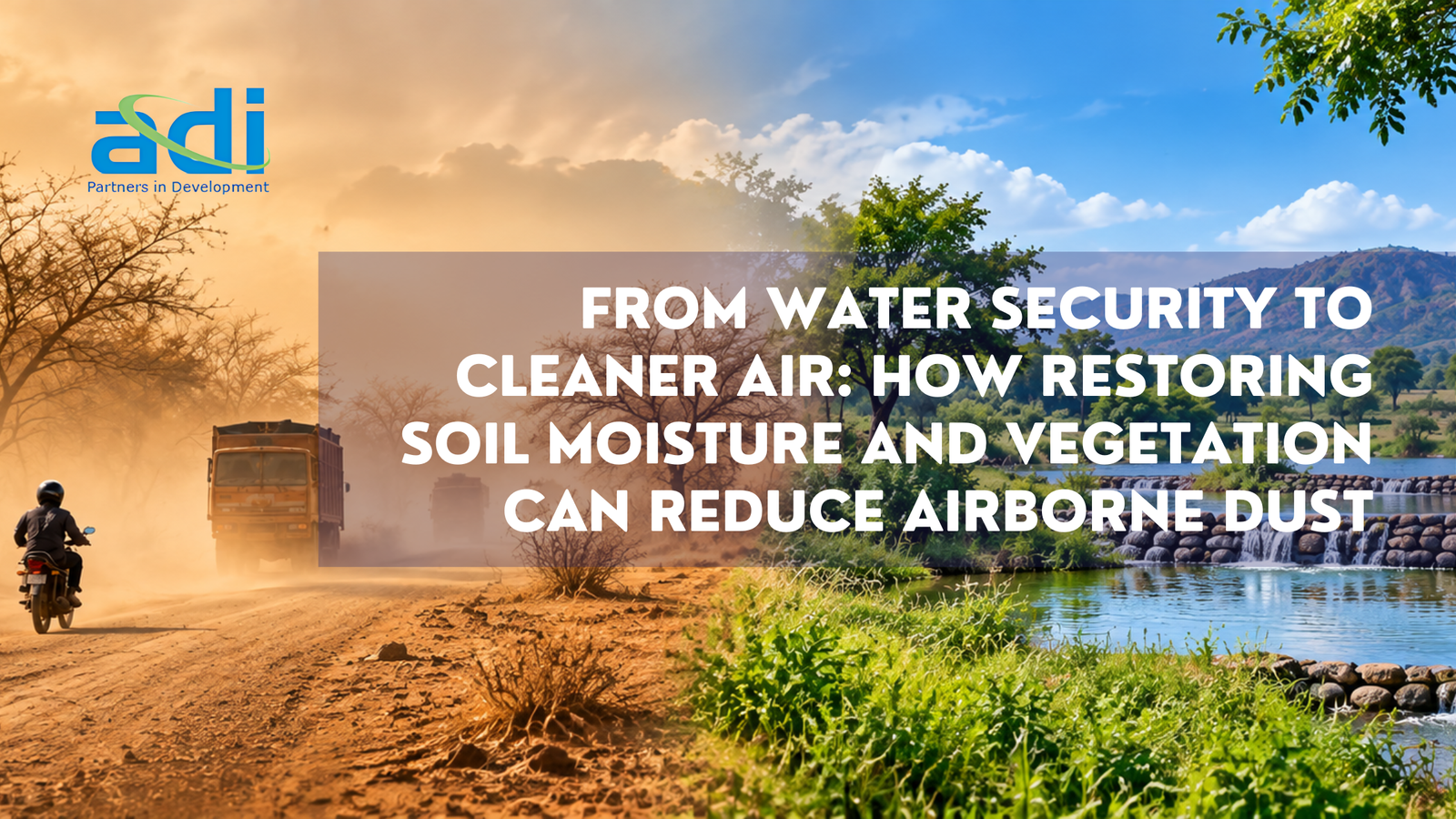
In 2018, researchers at MIT’s Center for Global Change Science studied northwestern India’s Thar Desert and traced a connection that most air-quality conversations overlook.
As monsoon rainfall in the region increased by roughly 30% since 2000, soil moisture rose 17–27%, and vegetation cover increased 14–21%. At the same time, satellite-measured airborne dust fell 11–22%, with the steepest declines where gains in soil moisture and vegetation were strongest.
The physics is simple: wet soil binds together; dry soil releases dust. Vegetation holds the ground down. The researchers also ruled out weaker winds as the explanation; they linked the decline in dust to changes in the land itself.
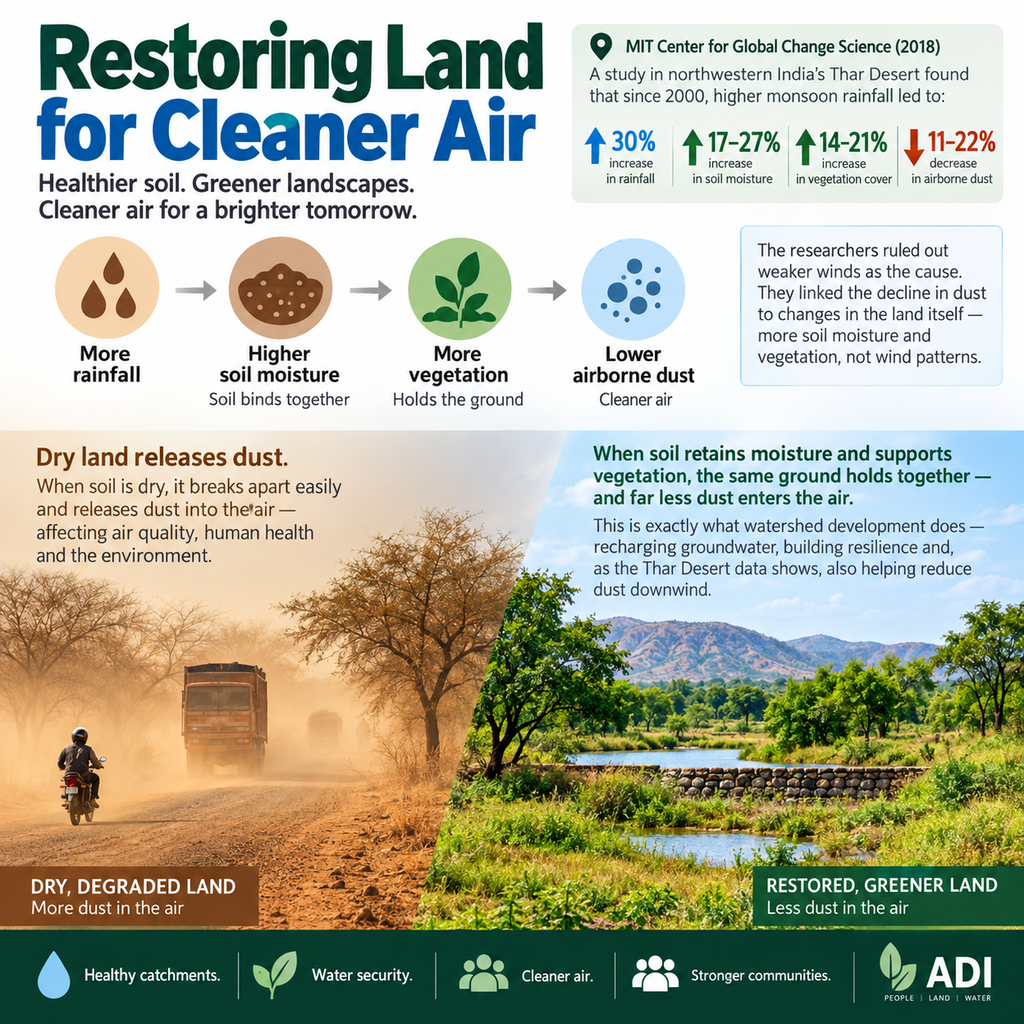
This is also what watershed development is designed to do.
Check dams, farm ponds, contour trenches and catchment restoration are typically discussed in terms of groundwater recharge and drought resilience. But the Thar Desert data points to a wider benefit: the same soil moisture and vegetation that help secure water can also keep dust out of the air.
It’s the same ground ADI has been working on for over two decades. Across more than 20 states, ADI’s water resource management programs, from check dams and water-harvesting structures to farm ponds, contour trenching, plantations and ridge-to-valley watershed rejuvenation, have been built to address India’s groundwater crisis. Every catchment ADI helps recharge groundwater, strengthen agriculture and enhance vegetation cover — and, the Thar Desert data suggests, helps reduce the dust carried downwind. Livelihoods and community institutions built alongside these assets help sustain these gains over time, including through droughts and years of low rainfall.
Clean air and water security may not always be separate problems requiring separate solutions. In India’s driest regions, both can begin with the same thing: restoring the ground beneath our feet.