
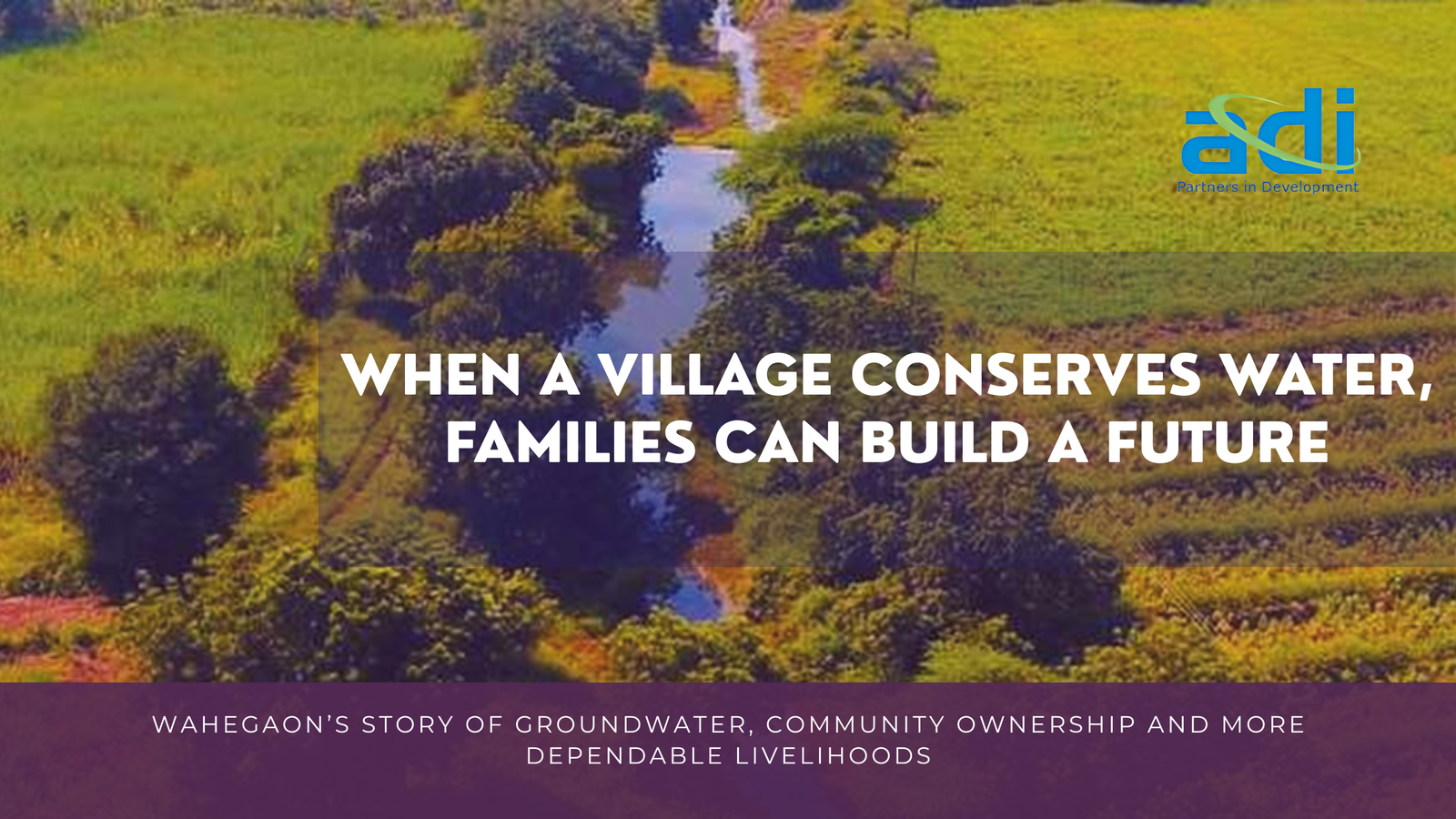
Wahegaon’s story of groundwater, community ownership and more dependable livelihoods
A global challenge with a human face
Across the world, water security and livelihood security are inseparable. Agriculture accounts for around 72% of global freshwater withdrawals, while renewable freshwater availability per person has fallen by 7% over the past decade, according to UN-Water’s summary of FAO’s 2025 AQUASTAT data. Behind these figures is a question that matters to every farming family: can the landscape around us continue to support a living? [1]
Water scarcity reaches beyond a failed crop. It can narrow livelihood choices and make the future harder to plan. Conserving the environment is therefore not separate from improving people’s lives. It means protecting the shared resources on which those lives depend.
Wahegaon, a village in Maharashtra, offers a grounded example of this connection. Its experience shows how action taken for a community’s water system can strengthen the prospects of individual farmers, workers and families.
India’s context: a shared resource needs a shared response
In India, groundwater is central to the relationship between farming and environmental responsibility. The United Nations University identifies India among countries where aquifers in important agricultural regions face overexploitation. The challenge is not only to access water, but to replenish and manage it responsibly. [2]
A farmer may own a field and a well, but the conditions that replenish that well extend beyond the farm boundary. Rainfall, drainage channels, recharge zones and the geology beneath neighbouring fields all matter. In Wahegaon’s Deccan basalt landscape, groundwater is held and transmitted through weathered rock and fractures, making availability localised and uneven. [3]
This is why durable water security cannot be built one farm at a time in isolation. It requires technical understanding, collective decisions and institutions capable of caring for a resource that many people depend on.
Wahegaon: close to a dam, but short of dependable water
Before the water-resource intervention, Wahegaon’s agriculture was largely rain-dependent, assured irrigation was limited, and several wells struggled during summer. Families travelled outside the village for sugarcane cutting and seasonal labour because local farming could not reliably sustain their livelihoods. [3, 4]
The village’s proximity to the Jayakwadi dam did not automatically translate into water security. Former Sarpanch and monitoring-well owner Laxman Bobde recalls:
“Jayakwadi dam constructed just in the periphery of the village could not fetch any water to our village.” — Laxman Bobde [3]
Drinking water was no less uncertain. Farmer Narayan Bobde describes a village that relied on a multi-village supply scheme about three kilometres away. When that supply turned erratic, families fell back on the wells in their own fields:
“We were forced to drink polluted drinking water from the wells located in our agricultural lands.” — Narayan Bobde [3]
Irrigating with the same water, he adds, spoiled the texture and strength of the soil over the years. [3] The problem was never a missing dam on a map. It was a shortage of water held in the right place, at the right time, within reach of the people who needed it.
Thirteen check dams, 100 wells, and a connected approach
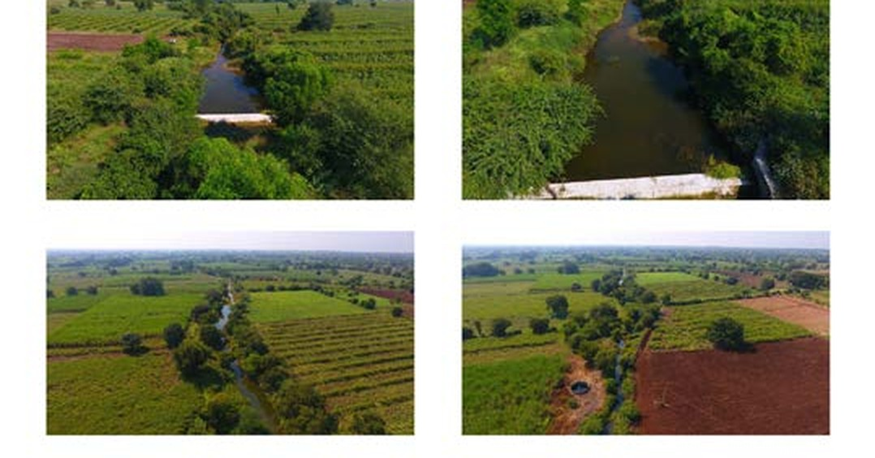
Technical surveys of Wahegaon’s three drainage lines began in 2006, in a partnership between PepsiCo India and Alternative Development Initiatives (ADI), working closely with the Gram Panchayat and the farming community. The programme was planned around the village’s natural drainage and the hydrogeology of its basalt aquifer. The core works included 13 cement check dams across three drainage lines, recharge structures for 100 open wells in the command area and rejuvenation of an earthen water-retention structure. [3, 4]
The check dams slowed monsoon runoff and increased the time water remained in contact with the drainage beds. This improved opportunities for infiltration into the weathered and fractured basalt beneath the village. Because Wahegaon continues to draw on the shallow aquifer through open dug wells, rather than depending on deep borewells, that recharge reaches farmers’ wells directly. Low-cost drip-irrigation pilots, improved agricultural practices and horticulture support connected better availability with more efficient use. [3, 4]
Community ownership made the structures more than infrastructure
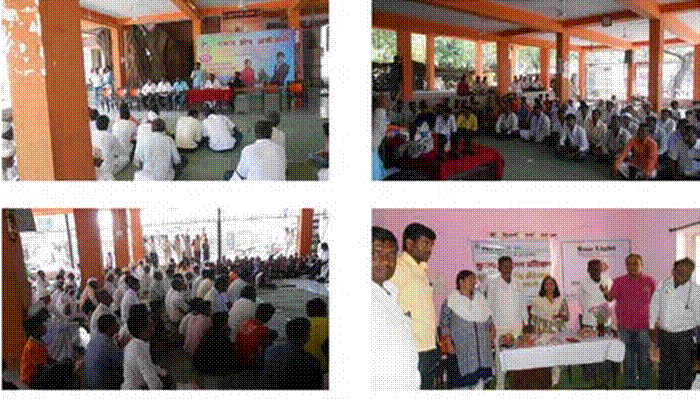
Community participation began before construction. As Laxman Bobde explains:
“We invited the meeting of Panchayat and passed a resolution for the approval of the construction of these check dams.” — Laxman Bobde [3]
That decision made water conservation a village undertaking rather than an external construction project. Once the Panchayat had approved, work moved quickly; by his account, the 13 check dams were built within about six months. [3]
Thirteen Water User Groups were then formed, one around each check dam, made up of the farmers whose land lies beside it. Narayan Bobde describes the thinking behind this approach:
“We also had a thorough discussion on the methodology of the construction of the check dams and decided to form user groups of the beneficiaries which had their agricultural lands around each check dam.” — Narayan Bobde [3]
The groups were trained, and farmers took part in planning, monitoring and maintenance. His account also shows what ownership means in practice:
“We also have planned to have joint visit of user groups to these check dams in the month of April to assess the wear and tear of the structure as well as to assess the silt deposition in the check dams.” — Narayan Bobde [3]
Inspection, repairs and desilting are less visible than construction, but they protect the investment through successive monsoons. The assessment describes the wider institutional base: Gram Panchayat leadership, Water User Groups, Self-Help Groups, farmer groups and local resource persons together supporting awareness, taking part in maintenance, encouraging responsible water use, organising village discussions and linking local needs with technical guidance and government schemes. [3]
The village’s ambitions grew with its ownership. Vijay Anna Borade of Maharashtra’s Water Conservation Corporation noted that two more locations could complete the drainage-line treatment, and asked for a detailed project report so that Wahegaon could be taken up under the state’s Fast Track watershed programme. [3] A community that has learned to look after its water begins to ask for more of the landscape to be treated.
Nearly two decades on: what the water table shows
The 2026 assessment compares the same 27 monitored wells across two periods, 2009–2015 and 2020–2024. Using the same wells matters, because it avoids the distortion of comparing wells of different depth, construction and location. [3]
Pre-monsoon groundwater, the period of greatest stress, improved from an average of 13.43 metres below ground to 8.75 metres, a gain of 4.69 metres. Post-monsoon levels improved by 3.26 metres, from 5.77 metres to 2.51 metres, indicating a stronger seasonal recharge response. [3, 4]
Wells also behave better under real irrigation use. Average drawdown after eight hours of pumping fell from 2.22 metres to 1.49 metres, and average recovery time after pumping fell from 11.62 hours to 6.35 hours, about 45% faster. For a farmer, that is a well that tires less and is ready to pump again sooner. [3, 4]
The land shows the change too. Satellite-based mapping records mapped vegetated agricultural land rising from about 0.68 square kilometres in 2010 to 3.31 square kilometres in 2025, while barren land fell by 41.55%. Recent planning records show about 513 hectares irrigated out of 856 cultivated hectares. Many Wahegaon farms did use well irrigation before, so the central finding is not just that more land is irrigated. It is that irrigation has become more dependable. [3, 4]
Wahegaon at a glance
| Indicator | Baseline | Recent |
| Pre-monsoon groundwater depth (same 27 wells) | 13.43 m below ground (2009–15) | 8.75 m (2020–24): 4.69 m shallower |
| Post-monsoon groundwater depth | 5.77 m | 2.51 m: 3.26 m shallower |
| Drawdown after eight hours of pumping | 2.22 m | 1.49 m |
| Recovery time after pumping | 11.62 hours | 6.35 hours: about 45% faster |
| Vegetated agricultural land (satellite mapping) | 0.68 km² (2010) | 3.31 km² (2025): +383% |
| Barren land | 3.03 km² (2010) | 1.77 km² (2025): −41.55% |
| Irrigated area | Limited assured irrigation | About 513 of 856 cultivated ha (about 60%) |
| Mean annual farm income (nominal) | ₹2.03 lakh (2009–15) | ₹5.20 lakh (2020–24); ₹3.83 lakh in 2015–20 |
More dependable water, more possibilities for farming
Dependable water is what makes certain kinds of farming possible. A perennial orchard cannot be left to the monsoon: it needs water through the dry months, year after year. Wahegaon’s mosambi, or sweet lime, orchards reflect that. Sweet lime was already an important horticulture crop in the village’s baseline records, and the 2022–23 agriculture plan shows about 92 hectares under fruit crops and orchards, alongside cotton as the principal Kharif crop. Drip irrigation then stretches each litre further, and farmers moved toward horticulture and floriculture with drip. [3, 4]
Better-performing wells also support standing crops through dry spells and greater continuity between seasons. Historical records cited in the assessment describe a Rabi crop in November 2009 and later summer crops, evidence of a shift toward farming beyond the monsoon. The evidence demonstrates stronger multi-season cultivation and irrigation reliability. It does not establish that every farm achieves three harvests a year or that drought risk has disappeared. [3]
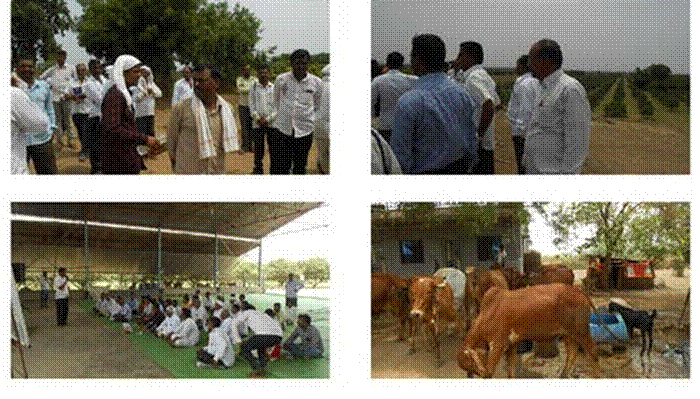
Mean annual farm income rose from about ₹2.03 lakh in 2009–15 to ₹3.83 lakh in 2015–20 and ₹5.20 lakh in 2020–24. These are nominal figures, and the assessment treats income as shaped by groundwater, canal water, farmer investment, crop choice and markets together. [3] In Narayan Bobde’s own words, the check dams “has not only solved our drinking water problem but has increased our agricultural production.” [3]
The change reaches people who depend on agricultural wages as well. Community accounts describe a substantial reduction in distress migration. Where residents once left for seasonal work, farmers now bring workers from neighbouring villages during peak agricultural operations. This is a reported community experience rather than a finding from a formal migration census, but it captures an important shift in local opportunity. [3, 4]
When the community benefits, individual lives can grow
Improved water conditions have created a stronger setting for women’s participation. Self-Help Groups became platforms for savings, livelihood training, fruit processing, goat rearing and involvement in village development. The assessment notes that SHGs also contributed to the social ownership of the water initiative, linking technical improvement with household awareness, livelihood planning and collective responsibility. [3, 4]
Savita Boke, a Self-Help Group and livelihood participant, describes how water availability affects everyday life:
“When water availability improves, the pressure on families is reduced, and women are able to participate more actively in village activities.” — Savita Boke [3]
Water affects household work, livestock care, kitchen gardens and farm support. Greater reliability eases some of the uncertainty around these responsibilities. Savita’s account goes further, linking improved conditions with opportunities to develop skills:
“These trainings were useful because they showed that village development is not only about water structures, but also about how families can use improved conditions for income and skill development.” — Savita Boke [3]
During the recent assessment, household tap-water connections were functional and tanker supply was not required. The programme also supported drinking-water facilities benefiting nearly 500 children at Nagnath Vidyalaya. These outcomes broaden the story beyond irrigation, while the assessment recognises that domestic water security also depends on supply infrastructure and continued management. [3, 4]
Protecting progress is the next collective responsibility
Wahegaon’s present conditions cannot be attributed to check dams alone. Farmer investment, micro-irrigation, government programmes and canal-water availability from April 2021 added to the original conservation and community-management foundation. The assessment treats these as complementary contributions to an interconnected system. [3]
The village is not immune to scarcity. Monitoring in 2026 recorded deeper and more variable groundwater levels during the late dry season. There is also a built-in tension: better water availability can raise water use if pumping and crop-water decisions are not managed carefully, whether farmers draw on wells, canal water or electric and solar pumps. Continued maintenance, groundwater monitoring, efficient irrigation and crop-water planning remain essential. [3]
Those are tasks for institutions, not machines. The Water User Groups that inspect and desilt, the Gram Panchayat that convenes village decisions and the SHGs that carry the conversation into households are what turn a set of structures into long-term stewardship. This makes Wahegaon’s lesson more useful, not less. Resilience does not mean eliminating uncertainty. It means strengthening a community’s ability to understand its resources, respond to pressure and make responsible decisions together.
The deeper achievement: confidence to shape a future
Perhaps the clearest expression of the change comes from Savita Boke:
“For women, the important change is confidence.” — Savita Boke [3, 4]
She connects that confidence with collective participation:
“The SHG platform helped women come together and see water management as part of overall village progress.” — Savita Boke [3]
That is the heart of Wahegaon’s story. By caring for the water system they share, residents have strengthened the foundations on which individual lives are built. The visible achievements are check dams, better-performing wells, orchards and productive fields. The deeper achievement is a community better equipped to sustain work, participation and hope close to home.
Building a better future for a family can begin with protecting the environment that sustains an entire village.
Sources and notes
[1] UN-Water, “FAO: 2025 AQUASTAT Water Data,” 12 January 2026. https://www.unwater.org/news/fao-2025-aquastat-water-data
[2] United Nations University, “5 Facts on Groundwater Depletion,” 20 March 2024. https://unu.edu/ehs/series/5-facts-groundwater-depletion
[3] Alternative Development Initiatives, Wahegaon Impact Assessment Report (2026). Supplied project document. This is a programme assessment by an organisation involved in the initiative, not an independent third-party evaluation.
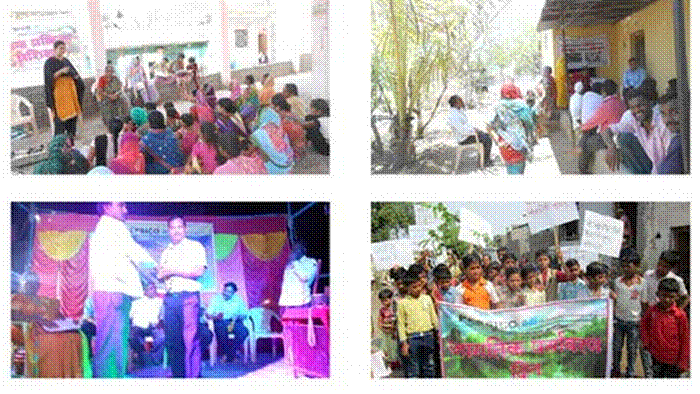
[4] Wahegaon: A Story of Groundwater, Mosambi Orchards and Community-Led Change. Supplied summary of the impact assessment.Quotations are reproduced from the report’s community-testimonial section, which describes these narratives as summaries of community experiences. Photographs are from the Wahegaon Impact Assessment Report (2026), including field photographs and drone views.