
Safe and reliable water is the bedrock of rural prosperity. Without enough water for crops, livestock and homes, farming incomes dry up and families fall back on low-paying work. Conversely, when villages invest in conserving water, agriculture stabilizes, nutrition improves, and new businesses can flourish. ADI’s Sustainable Water Resources Development and Management (SWRDM) project shows this in practice. Using five interlinked pathways – from building ponds to empowering women’s savings groups – SWRDM has strengthened water security and generated new incomes for communities in Maharashtra, Uttar Pradesh and Punjab. This blog explores each pathway, with evidence from research and real examples (1. Pune, Maharashtra; 2. Mathura, Uttar Pradesh; 3. Sangrur, Punjab), to argue that water conservation must go hand-in-hand with economic sustainability, and that local groups (women’s Self-Help Groups, farmer associations, water user committees) are the key to lasting success.
Pathway 1: Reliable water – stable farming and income
Farming in India uses about 76% of the nation’s water. In rainfed regions, erratic rainfall or drying wells mean crop failure and lost income. For example, at Shirur, Pune, Maharashtra with tanks and wells drying up, villagers relied on water tankers by early summer. In such a crisis, linking water management to livelihoods is essential: building ponds or recharge wells directly increases cropping area and productivity, which drives food production and incomes.
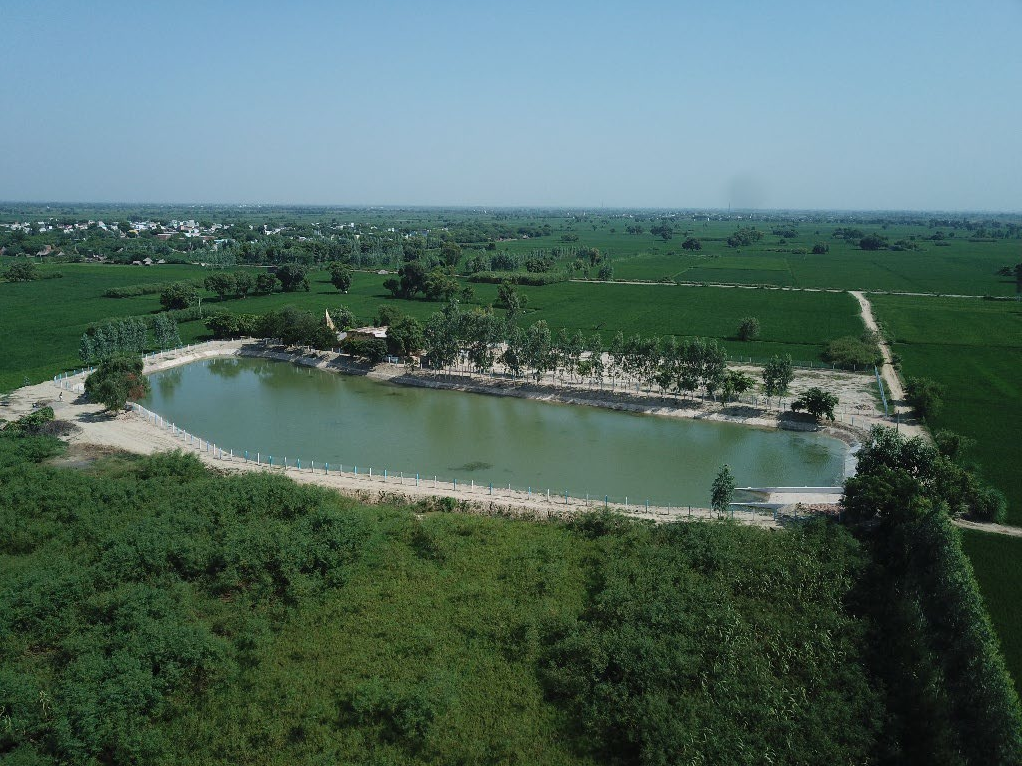
WRI’s review of Indian watersheds found treated areas allow farmers to grow multiple crops per year and invest in livestock, doubling or tripling yields. At the same time, local incomes diversify: freed from drought risk, farmers add poultry or small businesses. SWRDM applied these lessons in Shirur Block of Pune District of Maharashtra and Chatta Tehsil of Mathrura District of Uttar Pradesh by restoring and creating ponds, building groundwater recharge structures and training farmers in organic and micro-irrigated farming and water management practices. As a result, farmers could reliably water their fields. (In SWRDM’s Sirur, Pune cluster, better pond storage and recharge helped 98 women launch agricultural enterprises, because farming became less risky.) In short, more reliable water means more stable harvests and a foundation for growth – a fact well documented in India’s policies and studies.
“Over time, watershed projects in India have allowed farmers to grow crops in two or three seasons each year, greatly boosting productivity. Many households could then expand into poultry and small business ventures.” (Restoration Diagnostic Case Example: India, World Resources Institute (WRI), 2020.)
Community groups do this work. In most villages, water users’ associations and farmer groups help maintain the new ponds and well-structures, share irrigation schedules, and teach efficient water use. For example, SWRDM formed Water User Groups in Kosi Kalan, Mathura so farmers could check water levels and jointly repair recharge tanks. Research shows such local institutions improve participation and outcomes – WRI notes that village groups (including farmer and user associations) provide the coordination and peer learning that make these interventions effective.
Pathway 2: Clean water – healthy people and farms
It’s not enough to have water; it must be safe. Contaminated water hurts health, which erodes livelihoods. Polluted wells can sicken people, raising medical costs and reducing labour. Irrigating with poor-quality water can also damage soils and crop yields over time. This link is stark in places like Punjab, where overuse of fertilisers and deeper pumping have tainted groundwater. Recent surveys in Mansa district (Punjab) found 23% of wells had nitrate above safe limits, and many also had fluoride beyond permissible levels. Overall, only about 12% of samples were “good” quality. Such contamination causes diseases (e.g. “blue baby syndrome” from nitrates) and means families must spend more on healthcare. According to the Columbia Water Center, Punjab’s intensive farming has left 79% of its groundwater blocks “overexploited”, driving water levels down and salt concentrations up.
Linking conservation to economics means tackling quality as well as quantity. When SWRDM improves water through recharge and filtration, households get safer drinking water and farmers use cleaner irrigation. For example, at Bhawanigarh Block of Sangrur District of Punjab State, ADI promoted rooftop rainwater harvesting at schools and clean drinking sources, reaching ~300 children. Villagers also learned to test and protect wells. These steps help ensure that improved water supplies actually translate into better health and productivity. Studies back this: participatory water projects in India explicitly note that women’s groups reducing water burden leads to “improved benefits to women” (less illness and drudgery) and safer domestic use. In sum, health and nutrition improve when water is conserved and kept clean, which in turn means people can work more and spend less on sickness – a clear economic gain. At Bhawanigarh Block of Sangrur District of Punjab State, SWRDM Initiatives rejuvenated and created 17 Water Harvesting Structures and one (1) indigenous biotechnology based decentralised Wastewater Management Structure.
“As groundwater tables plummet in Punjab, nitrate and fluoride pollution have become widespread: one study in Mansa found almost a quarter of samples dangerous for drinking. Clean water, then, is not a luxury but a prerequisite for healthy, productive households.” (Hit by Rapid Depletion, Mansa Groundwater Now Faces Nitrate, Fluoride Contamination: Study, The Times of India, 2025.)
Pathway 3: Women’s SHGs – savings, credit and new businesses
Village women’s Self-Help Groups (SHGs) are a proven catalyst for linking conservation and livelihoods. SHGs give women a financial base (through pooled savings and loans) and a platform for collective action. Studies consistently show SHG membership boosts women’s control over income and credit, raising empowerment. In rural India, these women’s groups often become the vehicle for broader development – including watershed work and micro- enterprises.
In SWRDM’s three clusters, women’s SHGs were at the heart of enterprise development. Across Shirur, Pune (Maharashtra); Chatta, Mathura (Uttar Pradesh) and Bhawanigarh, Sangrur (Punjab), 77 SHGs with 878 women members built a combined safety net of savings (total savings ~₹3.7 million). In Shirur (Maharashtra), 19 SHGs (274 women) were saving about ₹1.22 lakh per month, accumulating more than ₹3.00 million. They lent over ₹2.5 million internally to members. This capital funded 98 women to run micro-enterprises: they produced soaps, detergents, perfumes, organic compost and more (around 5,600 units made, 5,000 sold, earning ~₹2.2 lakh). In Mathura (UP), 22 SHGs (~220 women) saved ₹3.37 lakh and recycled ₹16.5 lakh as internal credit. Early enterprises included tailoring and beauty salons, whose net group incomes ranged ₹3,000–₹6,000 per month. In Bhawanigarh (Punjab), 36 SHGs (384 women) saved ₹4.54 lakh and invested ₹3.72 lakh of it into new livelihoods (tailoring, dairy value-addition, organic inputs, etc.). These SHGs even formed a district-wide federation to market products collaboratively.
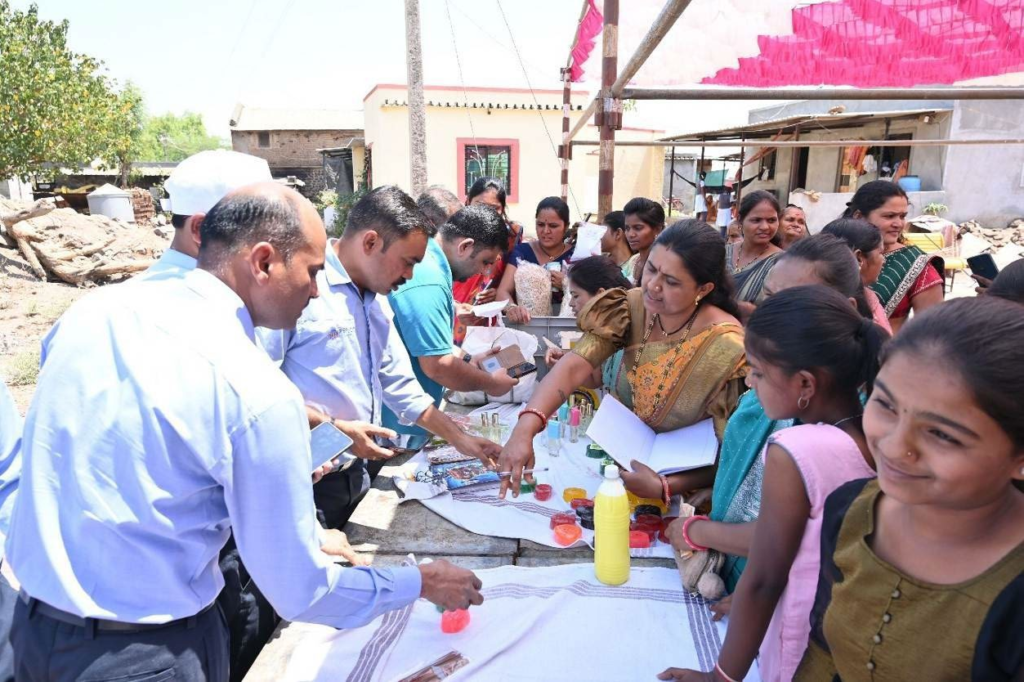
These examples show the multiplier effect: water projects build SHG strength, and SHGs build livelihoods. The WRI case study notes that restored watersheds “generate grains, legumes, vegetables…and many households have been able to expand…into poultry and small business development”. Indeed, ADI’s work found exactly this – women took advantage of steadier farming and their SHG loans to start small businesses. And when women earn more, evidence shows the whole household benefits (improved nutrition, health, education).
Crucially, SHGs also sustain conservation. In villages, women’s groups often become the custodians of tanks or check dams, organizing maintenance, managing irrigation schedules, and monitoring water use (sometimes via local “Water Mitra” youth volunteers). WRI highlights that including SHGs in watershed projects “improved women’s participation in decision making” and sustained momentum. ADI’s projects confirm this: when SHGs control the finances, they can ensure that benefits – like proceeds from a community farm or an enterprise – flow back into community maintenance funds. In other words, once women organize around savings, they are more likely to organize around water too.
Pathway 4: Leveraging government schemes – more water assets
India has many government programs for rural development (e.g. watershed missions, MGNREGA, agricultural subsidies). Pathway 4 is about pooling those resources efficiently. Converging schemes means using each rupee twice: for example, MGNREGA labor can build check dams while a watershed grant supplies materials. This speeds up asset creation and avoids duplication.
ADI helped each SWRDM cluster tap such schemes. For instance, in the water-deficit areas of Shirur and Kosi Kalan, ADI coordinated with state agriculture and rural development departments and farmer groups availed seeds and inputs from government schemes and through government convergence canals are linked with created water harvesting structures while improving the groundwater replenishment. The national watershed guidelines even stress “convergence and decentralisation of project management” with community participation.
The results of effective convergence are clear from national examples: India has restored over 45 million hectares of degraded land via watershed programs. Those areas saw multiple benefits – from higher land values to new business opportunities. WRI reports that government and donor funding directly to community-driven watershed work “enabled project implementation” and that community groups (SHGs, user groups, committees) “supported institutional coordination”. In other words, when official schemes align with village groups’ plans, water infrastructure gets built faster and benefits are maximized. Under SWRDM, this meant more water harvesting structures, wells and pipelines (assets) went up in less time, giving farmers and families quicker returns in terms of water and income.
Pathway 5: Youth and schools – a water-wise generation
Finally, the longevity of conservation depends on culture. Educating children and youth embeds water-wise habits that can last generations. SWRDM actively engaged schools and young people. For example, ADI set up “Water Mitra” clubs where students learn to measure rainwater, monitor groundwater levels, and spread awareness at home. In Bhawanigarh Block of Sangrur District alone, about 300 schoolchildren participated in Green School programs and groundwater surveys.
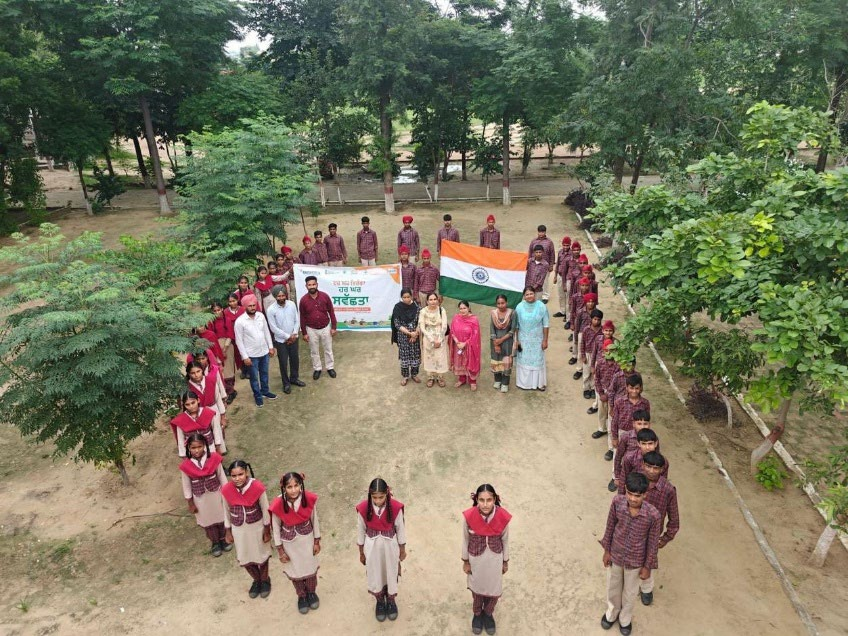
Educational initiatives have real impact. ADI notes that communities with literacy programs showed higher rainwater harvesting and more efficient irrigation practices afterwards. When youth collect and share data, villagers understand the changes in their own water systems, which prompts action. A global review of education programs confirms this: informed communities adopt new practices faster and hold each other accountable. By engaging the young, Pathway 5 ensures the conservation principles of the project outlive any single structure or grant. It turns each school and family into an advocate for water.
“ADI’s water literacy programs reported measurable changes: villages with active school programs adopted more rainwater harvesting and saw improved farm water use efficiency. Involving youth made the message stick.”( Educational Programs on Water Conservation: Building a Water-Savvy Generation, Alternative Development Initiatives (ADI), 2024.)
The power of Community Institutions
A cross-cutting lesson from SWRDM is that village institutions are the glue binding water action to economic gains. Women’s SHGs, farmer groups, Water User Committees and youth clubs all multiply the impact. They collect savings, they run enterprises, they manage pumps and canals, and they demand accountability. WRI found that these “village community groups – including female self-help groups, user groups, and watershed committees – provide effective institutional coordination” in restoration projects. In practice, this means a shared sense of ownership: when a repaired pond is built by local labour, the same community pledges to keep it filled and unpolluted. When an SHG loan funds a biogas plant, group members ensure the dung is collected to keep it running. The result is sustained action without endless outside input.
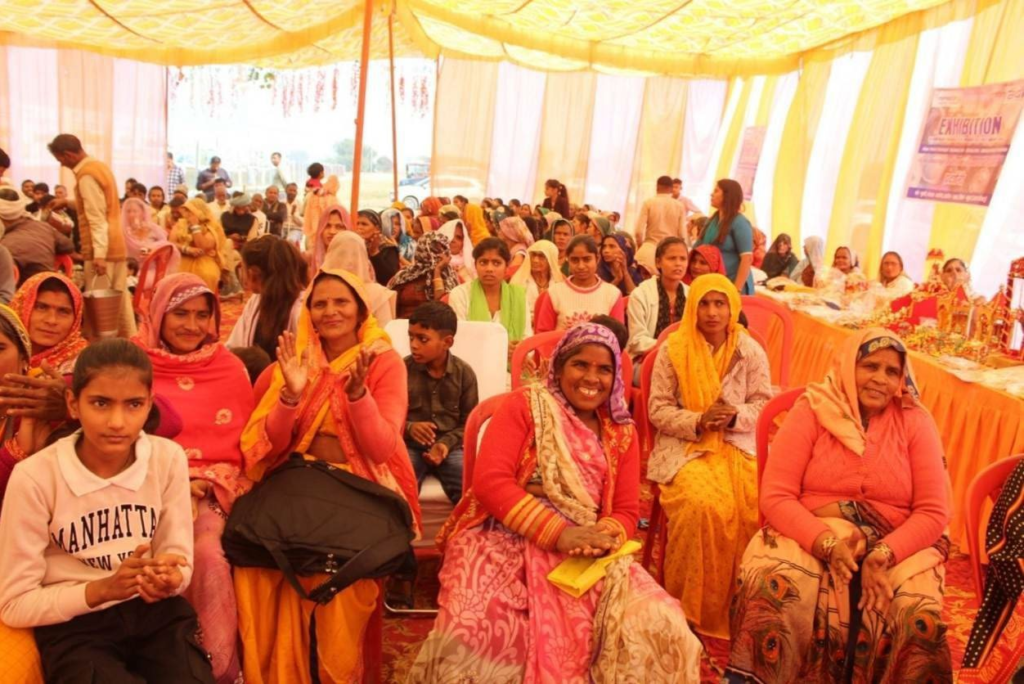
In SWRDM villages, this played out as follows: SHGs managed the revolving credit and marketed products together; Water User Groups logged rainfall and guarded tanks against misuse; farmer clubs experimented with alternate crops and passed on lessons. Each scheme we supported – whether technical (new filters), financial (savings), or educational (trainings) – was carried by these groups. Research shows that this local ownership is critical: top-down projects often fail when the agency leaves, but projects built and run by communities tend to last.
Looking forward
The evidence is clear: water conservation and livelihoods are inseparable. Projects that built water assets saw farmers plant more, businesses grow, and women earn more. Conversely, drought and contamination undermine the very economy policies aim to protect. ADI’s SWRDM example suggests a blueprint for rural development: treat water and income together and anchor every action in local groups.
What remains is the challenge of scale. How can governments, Civil Society Organizations or, NGOs and communities replicate this integrated approach across all of rural India? Will more villages embrace the idea that a penny invested in a recharge pit or a rainwater tank pays back in rupees of harvest and wage? The story from Shirur, Pune; Chatta, Mathura and Bhawanigarh, Sangrur suggests one answer: combine water stewardship with women’s leadership and youth education, and livelihoods will follow. Ultimately, strengthening water resources through community action may be the surest path to economic resilience – but it only succeeds if we keep the question open: how can we empower every village to weave water into its path out of poverty?